
Bilt Rewards
Bilt Technology, Inc.Finance
4.63.98K Reviews
- Version
- 4.170.2
- Installs
- 500.00K
- Age Rating
- Everyone
Screenshots
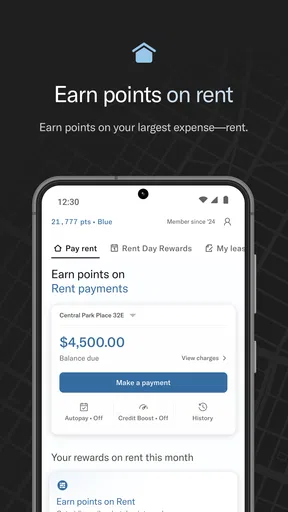
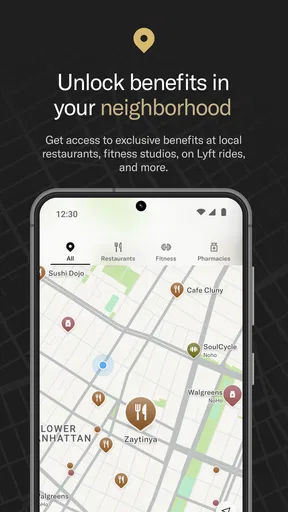
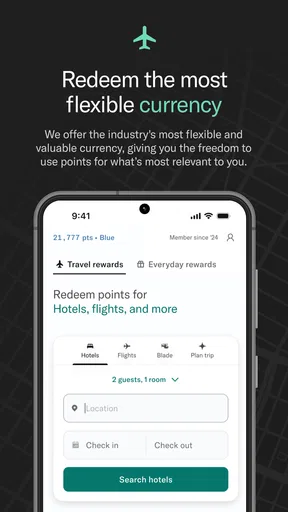
Our Review of Bilt Rewards
 Analysis by Appyee
I approached Bilt Rewards as a practical finance app for a very specific household question: can rent become part of a shared rewards routine without turning one person’s account into everyone’s account? That distinction matters. The app’s central idea is simple—earning points from rent—but the useful experience depends on who pays, who manages the account, and who is trusted to handle financial information.
After spending time with it, my view is that Bilt Rewards makes the most sense for renters who want to make an existing monthly expense more rewarding. It is free, aimed at everyone from an age-rating perspective, and developed by Bilt Technology, Inc. The app has built a strong user base, with over 500 thousand installs, a 4.6 average from around 45 thousand ratings, and roughly 4 thousand written reviews. Those figures suggest that the concept is easy for many people to understand, although they do not remove the need to check whether it fits your own rent arrangement.
How Bilt Rewards Fits Into a Shared Household
I find Bilt Rewards most useful in a shared home when one person clearly owns the account and the rent-payment routine, while everyone else tracks their contributions separately. Before getting started, I’d agree on who is responsible for paying, how roommates confirm their shares, and how the household will handle a move or change of payer. That gives us a practical basis for deciding whether the setup fits our living arrangement.
A realistic rent-day routine
Imagine two adults sharing an apartment. One person normally pays the landlord, while the other transfers their portion of the rent. In that arrangement, Bilt Rewards can be useful when the person making the official payment is also the person who can responsibly manage the rewards account. They can use the app as their personal record for the rent-related activity, while the other household member keeps their own bank records for the transfer.
I would not treat the app as a communal wallet or a replacement for a household budget. Its value is tied to the rent payment workflow, not to solving every shared-finance problem. Before setting it up, I would agree on three basic points: whose account is being used, who completes the payment, and how both people verify that the monthly amount was handled correctly.
That small conversation prevents a common mistake. A roommate may assume that because they contribute money, they should also use the other person’s login. I would avoid that. Financial apps are easier to manage when each account has a clear owner, and sharing credentials creates confusion about responsibility even when everyone in the home gets along.
What the app does well in this scenario
The strongest part of the experience is focus. Instead of asking me to build a complicated rewards strategy around groceries, travel, subscriptions, and miscellaneous purchases, Bilt Rewards starts with rent. That makes it easier to remember why I opened it and what I am checking. For a renter who already pays monthly, the app has a natural place in the calendar.
It also gives a household a reason to improve its payment routine. If rent is usually handled through scattered messages and last-minute transfers, adding one person as the responsible coordinator can make the process more orderly. I would still keep a separate household note or budgeting app for the split, utility bills, deposits, and reimbursements. Bilt Rewards should complement that system rather than become the only record.
The useful boundary is simple: one person can coordinate the rent workflow without pretending the app is designed to manage every person in the home.
Where shared use becomes awkward
The app is less suitable when several people want equal control over one rewards balance. A shared household may have different expectations about who gets the benefit, whether points are personal or communal, and what happens if someone moves out. Those are relationship and budgeting questions, not problems I would expect the app alone to settle.
It can also be a poor fit when the person who pays rent is not the person who wants to manage rewards. For example, if one roommate handles the landlord payment but dislikes financial apps, another roommate may be tempted to take over using the payer’s details. I would rather keep the account with the person who has the clearest authority and use ordinary transfers or a shared budget for everyone else’s contributions.
Setting up clear account boundaries
My first recommendation is to decide whether the account is personal or part of a household arrangement before entering information. In most shared homes, I would treat it as a personal account connected to one renter’s payment responsibility. That approach is easier to explain if the lease changes, a roommate leaves, or the group moves to a different property.
On a shared device, I would be even more careful. A phone used by several family members or roommates should not automatically become a shared finance terminal. I would use the device’s normal privacy protections, avoid leaving the app open, and make sure notifications are not visible to people who do not need to see financial activity. These are ordinary precautions, but they matter more than any points strategy.
I would also avoid creating multiple accounts simply because several people live at the same address. That can make the household’s records harder to understand and may lead to duplicated effort. The better arrangement is to identify the person whose rent payment is being tracked, then let everyone else participate through the household’s normal reimbursement process.
What to check before relying on it
Before making Bilt Rewards part of my monthly routine, I would confirm that the rent arrangement is compatible with the way I actually pay. A direct landlord payment, a property manager, and an informal roommate transfer are not the same situation. I would read each payment screen carefully, check the recipient details, and keep confirmation records until the transaction is clearly complete.
I would also pay attention to timing. Rewards should never become a reason to delay rent or take a risky route. If the app’s process feels less certain than the method I already use, I would prioritize the reliable payment and investigate the rewards workflow later. The financial cost of a missed or late rent payment is far more important than the appeal of earning points.
One practical habit is to complete the rent task earlier in the month than the final deadline. That leaves time to correct an address, amount, account, or payment-method problem without creating a crisis. I would then compare the app’s activity with my bank statement and household budget, rather than assuming that a completed-looking screen is the only confirmation I need.
Coordinating without turning the app into a group chat
Bilt Rewards can sit neatly inside a household routine, but I would not expect it to replace communication between roommates or family members. The coordinator still needs to tell the others how much they owe, when their transfers are due, and whether the rent payment has been completed. A shared calendar, a budgeting note, or a simple message can handle those tasks more clearly.
For couples, the arrangement may be easier if both people already treat rent as a joint expense. Even then, I would decide whether the rewards belong to the person managing the account or are simply considered part of the household’s overall benefit. That decision may sound minor, but it avoids an argument months later when one person changes jobs, moves, or takes over the rent payment.
For roommates, I prefer a written monthly process: one person posts the amount owed, everyone sends their share by an agreed date, and the payer confirms when rent is complete. Bilt Rewards can support the payer’s side of that process, but it does not remove the need for the group’s own recordkeeping.
Using it around family members and younger users
The Everyone age rating makes the app broadly approachable, but I would not interpret that as a reason to hand it to a child as an unsupervised money tool. Rent is an adult household obligation, and the account should remain with the person who understands the payment, the lease, and the consequences of an error.
A teenager might help a parent understand the interface or observe how a monthly payment is organized, but I would keep account access and financial decisions with the responsible adult. The same principle applies to an older relative who needs help with technology: assistance is fine, while passwords, payment details, and final approval should remain under the account owner’s control.
Trust also matters between adults. I would not give a roommate access just because they need to know whether rent was paid. A confirmation message or shared budget note is usually enough. Limiting access reduces the chance of accidental changes and makes it clearer who should contact support or investigate a payment issue.
How it compares with ordinary alternatives
The usual alternative is to pay rent through the landlord’s portal, bank transfer, check, or another established payment route and track the expense in a budgeting app. That approach is often better for people who want maximum simplicity and do not care about rewards. One familiar payment method, one bank record, and one household spreadsheet can be easier than adding another financial service.
Bilt Rewards has a different appeal: it gives the renter a reason to organize the rent payment around a rewards account. I see that as a meaningful advantage only when the process is convenient and the user will actually value the points. If the household already has a reliable system and the app introduces uncertainty, the conventional method may be the smarter choice.
It is also not a full replacement for a budgeting app. A budget tool can show income, bills, savings goals, and spending categories across the household. Bilt Rewards is narrower. Its strength is being connected to the rent-and-rewards idea, while its limitation is that it does not become a complete financial command center just because it lives on the same phone.
Small workflow choices that make a difference
The first useful habit is to separate “rent paid” from “points received” in my own records. I would mark the rent as a completed housing expense only after checking the payment, then treat any rewards as a separate benefit. This prevents me from mentally discounting rent before the transaction is secure.
The second is to keep the payer consistent whenever possible. Constantly switching between roommates may make the household’s history difficult to follow. A stable coordinator can compare monthly records more easily and spot an incorrect amount or missing contribution sooner.
The third is to review the account after a change in living arrangements. A new lease, a move, a roommate departure, or a change in who pays the landlord is a good reason to reassess the setup. I would not assume that an arrangement that worked in one apartment should continue unchanged in the next.
The fourth is to use the app for its intended decision, not as an excuse to chase every possible reward. If I have to bend my normal payment habits, expose information to too many people, or spend excessive time checking small details, the trade-off stops looking attractive. The best rewards routine is the one that remains boring, accurate, and easy to repeat.
Performance, availability, and practical expectations
The current version is 4.170.2, and the app requires at least operating system version 10. That makes the device requirement worth checking before a household member tries to install it on an older phone. In a shared-device situation, compatibility is only the first issue; privacy and account separation are equally important.
Because the app is free, the initial barrier is low. I can try it without treating the download as a financial commitment. Still, free does not mean frictionless. The real cost may be the time spent understanding the payment flow, coordinating with a landlord or roommate, and maintaining accurate records. I would judge it by whether those tasks fit naturally into my existing rent routine.
The app’s release date was May 11, 2021, which places it in a mature part of the finance-app market rather than a brand-new experiment. That history may reassure users who prefer an established product, but I would still keep the app updated and review each screen before confirming a payment. A long presence in an app store is not a substitute for careful use.
Who should choose it, and who should skip it
I think Bilt Rewards is a good candidate for a renter who pays rent regularly, wants a rewards angle, and is comfortable taking responsibility for one clearly defined account. It can also work for a couple or roommate group when one person is the coordinator and everyone agrees on how contributions are tracked.
I would be more cautious if rent is paid through a complicated chain of intermediaries, if the payer changes every month, or if the household expects a fully shared rewards balance. People who dislike managing another finance app may also prefer their existing bank or landlord portal. The same is true for anyone who values the fewest possible accounts over earning points from rent.
It is not the right tool for someone looking for detailed household budgeting, debt management, or a complete shared-money system. I would choose a dedicated budgeting solution for those needs and consider Bilt Rewards only as an optional layer for rent.
My household verdict
My final impression is favorable, but deliberately practical. Bilt Rewards is most convincing when I use it as a focused rent-and-rewards tool, not as a shared family wallet, a roommate management system, or a substitute for careful payment records. Its free price and clear purpose make it easy to try, while the strong average rating and sizeable install base show that the idea has broad appeal.
For a household, the winning setup is simple: one responsible account owner, a separate way to track everyone’s share, clear communication, and no shortcuts with passwords or payment confirmation. That structure lets the app add value without blurring financial boundaries.
I would recommend it to renters who can make the workflow fit their normal payment habits. I would skip it when the household cannot agree on ownership, when the payment route feels uncertain, or when a standard bank or landlord method already solves the problem better. Used within those limits, it offers a sensible way to make an unavoidable monthly expense work a little harder.
Verdict
Strengths of Bilt Rewards
- Earn points on rent payments without transaction fees.
- Points can be redeemed for travel, dining, fitness, and statement credits.
- Bilt Dining rewards extra points at participating restaurants.
- Useful neighborhood guides and events help discover local places.
- Points may be transferred to several airline and hotel partners.
Limitations of Bilt Rewards
- Eligibility and rewards depend on your property and payment method.
- Some benefits require linking a bank account or using a Bilt card.
- Transfer partners and redemption values can change over time.
- Rent payment processing may require verification and extra setup steps.
- The app is most valuable for renters in participating properties or networks.
Similar Picks in This Category
View All
Google Wallet
Google LLC4.3

Airtel: Recharge, Bank & Loans
Airtel4.0

PayPal - Pay, Send, Save
PayPal Mobile4.2

DANA Indonesia Digital Wallet
PT Espay Debit Indonesia Koe4.5

Binance: Buy Bitcoin & Crypto
Binance Inc.4.8

Cash App
Block, Inc.4.7
Frequently Asked Questions
What is Bilt Rewards, and how does it work?
Bilt Rewards is a loyalty program designed primarily for renters, allowing eligible members to earn points on rent payments and everyday purchases. Depending on your payment method, property participation, and card eligibility, rent payments may earn points without the usual transaction fee. The app also offers travel, dining, fitness, and shopping rewards, although available features can vary by location and account type.
Can I earn Bilt Points when paying rent?
Yes, Bilt may allow members to earn points on rent, but the exact process depends on your landlord, property management company, and payment method. Some buildings participate directly, while other users may pay through Bilt-supported options. Before relying on the service, check whether your property is eligible and review any applicable processing fees, payment rules, minimum requirements, or monthly limits shown in the app.
Do I need a Bilt Mastercard to use Bilt Rewards?
No, you do not necessarily need the Bilt Mastercard to create an account or access every Bilt Rewards feature. However, the card can provide additional ways to earn points, including qualifying rent and everyday purchases, subject to the card’s current terms. Users without the card may have fewer earning opportunities, so it is worth comparing the available options before applying.
How can Bilt Points be redeemed?
Bilt Points can generally be redeemed through several categories, including travel, rent-related benefits, fitness classes, dining, shopping, and selected experiences. Travel redemptions may offer transfers to participating airline or hotel loyalty programs, while other options can have different point values. Availability, redemption rates, partners, and restrictions may change, so review the current terms in the app before confirming a redemption.
Is Bilt Rewards safe and worth downloading?
Bilt Rewards uses account security measures and requires users to provide personal and payment information, so you should download it from the official Google Play Store or Apple App Store and keep the app updated. Whether it is worthwhile depends on your renting situation, spending habits, and interest in travel rewards. Carefully review privacy policies, fees, card terms, and payment conditions before signing up.
